

Mobile App Development for Business
A mobile app is a channel that is always in your customer's pocket: orders in a couple of taps, push notifications, a personal account, loyalty rewards and payment without going to a website. Studio Nomad provides turnkey mobile app development for iOS and Android — from idea validation and UX/UI design to the back end, App Store and Google Play publishing and post-launch support.
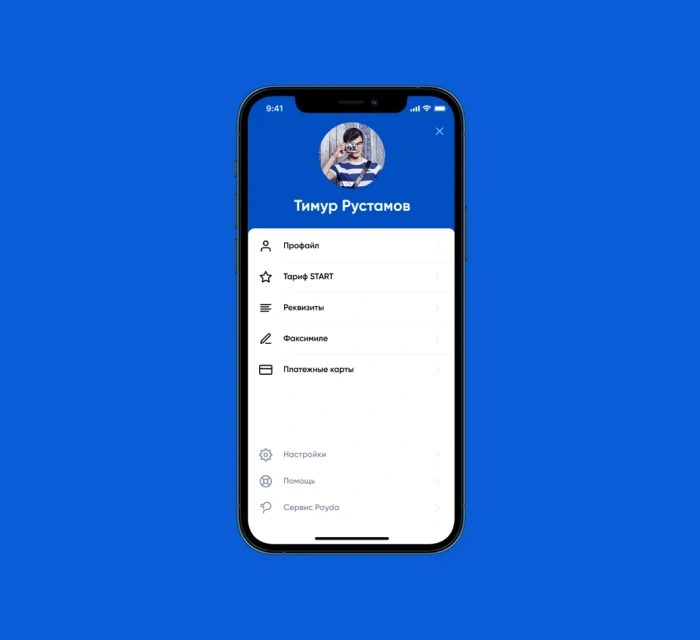
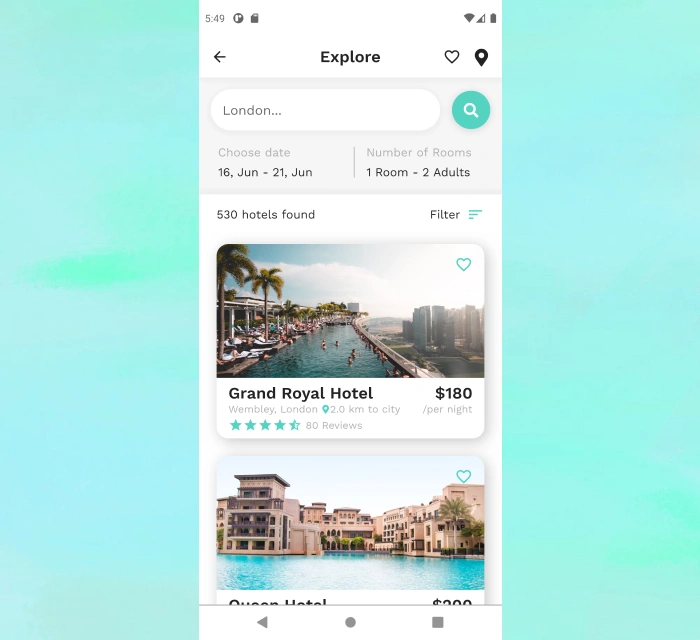
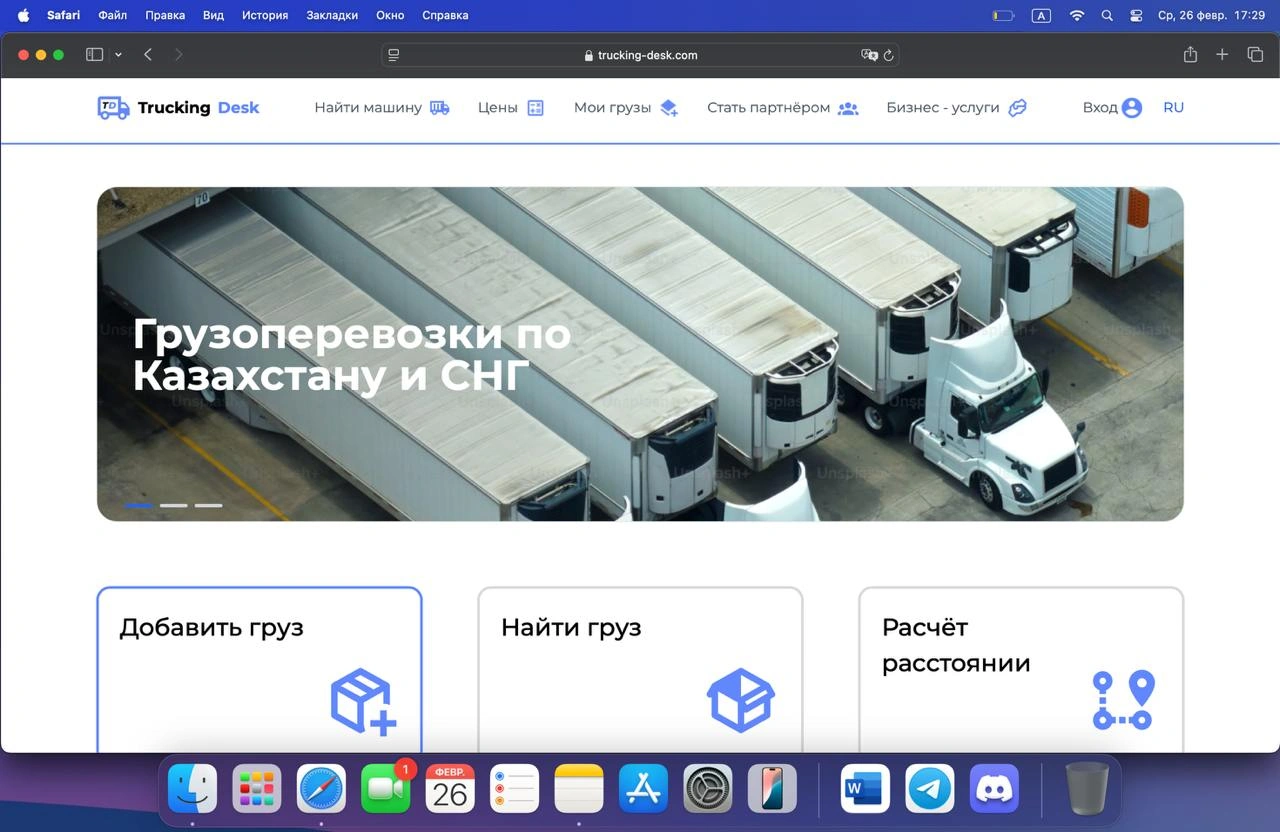
Our portfolio includes Payda, an accounting app for small and medium-sized businesses; a mobile marketplace with card payments; a messenger with audio and video calls; a hotel search and booking app; and an iOS and Android app that is part of the Trucking Desk freight portal. We build customer apps, tools for employees and apps that work together with a website, CRM or accounting system.
Mobile app development starts from 1,500,000 ₸. We work under a contract, fix the scope and timeline before we start, and you can split the payment — installments with no banks and no overpayment.
What apps we build
An app starts not with screens but with a business goal: increasing repeat sales, reducing the load on your call center, giving employees mobile access to data or launching a new digital product. The goal determines the features, technology and budget. These are the types of apps we work on:
- Customer apps. Catalog, cart, payments, order history, rewards, and push notifications about order status and promotions. A good fit for online stores, restaurants, delivery services, fitness clubs and clinics.
- Mobile marketplaces and services. Multiple sellers or providers, search and filters, booking, ratings and reviews, in-app payments. One example is our Flutter marketplace app with Google sign-in and instant card payments.
- Business and finance apps. Accounting, documents, reports and client accounts. Payda helps small and medium-sized businesses keep accounting and tax records, run payroll, issue invoices and work completion certificates, file reports and pay taxes online.
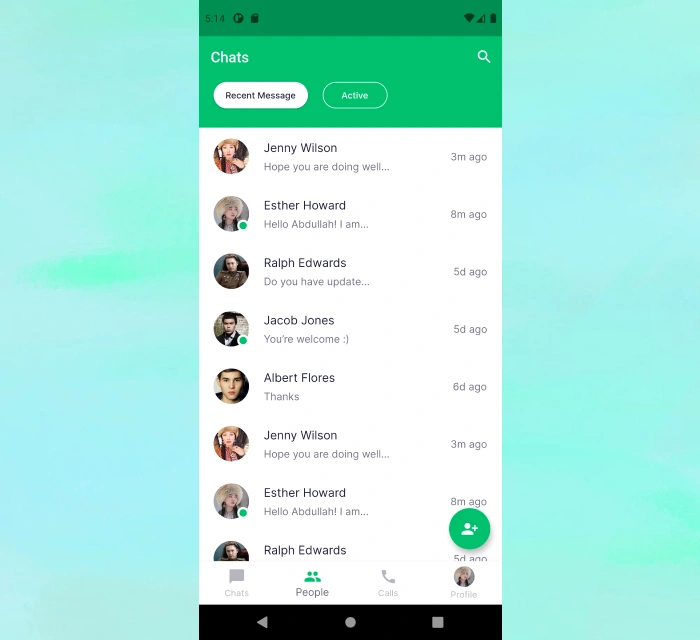
- Communication. Chats, real-time messaging, and audio and video calls — as in our messenger built with Flutter and Firebase.
- Booking and travel. Search by country, city and district, a smart filter, hotel selection and room booking — that is how our hotel search app works.
- Apps for employees and partners. Mobile access to orders, the warehouse and CRM. The Trucking Desk freight portal, which brings together carriers, dispatchers and clients, includes an iOS and Android app; the CRM of the AK ZHOL PHARM pharmacy chain is integrated with a mobile app and data collection terminals for stocktaking.
Ideas for different industries: for a car dealer — service and test drive booking and vehicle service history; for a clinic — doctor appointments, reminders and test results; for a restaurant — menu, delivery and rewards; for a logistics company — shipment statuses and documents for drivers. We build websites for these businesses too — see car dealer websites and clinic websites.
If the app is part of a larger system, we build everything together: website, admin panel, API and app. For web sales see online store development, for platforms with sellers and providers see marketplace development, and for internal processes see CRM and automation.
App or website: which to choose
Not every business needs a mobile app. Before we start, we take an honest look at what will deliver results faster and at a lower cost:
- A responsive website — if customers come from search and ads and buy once or twice. A website needs no installation and is indexed by Google and Yandex.
- A mobile app — if customers come back regularly: repeat orders, rewards, appointments, a personal account, push notifications. An app retains your audience and gives access to phone features such as the camera, geolocation and notifications.
- An app for employees — if couriers, sales reps, drivers or warehouse staff need mobile access to orders, stock and CRM.
- A website and app together — a common choice for a growing business: a shared back end, one database of products and customers, with the site and the app working as two sales channels.
Before development it helps to answer a few questions: who will use the app and how often, what problem it solves better than a website, how it will earn or save money, who will update the content and how you will drive installs. We go through these questions at the first meeting — sometimes it turns out that a website is enough to start with.
If you have not decided yet, start with an online store or a corporate website with an API that an app can connect to later. That way your investment in the website is not lost, and the app will work with the same data.
Native or cross-platform development
We choose the technology to fit the task and budget, not the other way round.
Cross-platform development with Flutter
One Dart codebase for iOS and Android. It is faster and usually cheaper than two separate native builds, and the interface runs smoothly on both platforms. We built the mobile marketplace, the messenger and the hotel search app with Flutter. Flutter suits most business apps: catalogs, orders, booking, personal accounts and chats. A shared codebase also makes support easier: a fix or a new feature ships to both platforms at once.
Native development
Separate apps for Android (Kotlin) and iOS (Xcode). We take this route when an app needs deep access to device capabilities, complex graphics or maximum performance. Payda was developed natively.
Back end and admin panel
Almost every app needs a back end: a database, an API, authentication, push notifications and an admin panel for content and orders. We use Firebase for fast launches and a custom back end on Laravel or Node.js when the project needs complex business logic and integrations. If you already have a website or CRM, we connect the app to them via API so the data stays consistent.
Updates and compatibility
Apple and Google regularly release new versions of iOS and Android and update their store requirements. That is why we choose the architecture and libraries with long-term support in mind, and after launch we monitor compatibility so the app keeps working after the next system update.
App development stages
Our process is transparent: after each stage you see the result and approve the next step.
- Research and concept. We analyze the app's goal, audience, competitors in the stores and usage scenarios, and decide what goes into the first version (MVP) and what goes into later releases.
- Specification. We describe the screens, user roles, integrations and back-end requirements. Based on the specification, we quote a fixed price and timeline.
- UX/UI design. Wireframes of key screens, then a branded design that follows iOS and Android guidelines. A clickable prototype can be shown to future users before development starts.
- Development. The app, the back end and the admin panel. We share intermediate builds so you can follow the progress on your own phone.
- Testing. We test scenarios on different devices and OS versions, server load and the security of data transfer.
- Publishing. We prepare descriptions, screenshots and icons and go through App Store and Google Play review. We recommend registering the developer accounts in your company's name so the app stays under your control.
- Support and growth. We fix bugs, update the app for new iOS and Android versions and ship new features.
At the start we need a description of the idea and target audience, examples of apps you like, your brand guidelines if you have them, and access to the systems the app should integrate with. If the idea is still raw, we start with research and a prototype — that costs less than reworking a finished build.
The timeline depends on the number of screens, roles and integrations, so we give it after the specification and fix it in the contract. To reach the market sooner, we suggest starting with an MVP — a version with the key features — and then developing the app based on real user data.
How much mobile app development costs
Mobile app development at Studio Nomad costs from 1,500,000 ₸. That is the starting price for an app with a basic feature set; the final cost depends on:
- platforms: iOS and Android with Flutter, or two native versions;
- the number of screens and user roles — customer, provider, administrator;
- the back end: Firebase or a custom back end with an admin panel;
- integrations: online payments, maps and geolocation, CRM, 1C, website, delivery services;
- real-time features: chats, calls, status tracking;
- the scope of design and animation.
The price covers research and specification, UX/UI design, development of the app and back end, an admin panel, testing, App Store and Google Play publishing and a 24-month warranty.
Also budget separately for costs paid directly to third-party services: the annual Apple Developer Program membership, the one-time Google Play registration fee, a server or Firebase plan, and paid APIs such as maps or SMS.
Three decisions help reduce the cost: reuse the back end and admin panel of your existing website, choose Flutter instead of two native versions, and postpone complex animations and secondary features to the next release.
We quote a fixed price after the specification and put it in the contract together with the payment stages. Installments directly with the studio, with no banks and no overpayment, are possible: we agree on the term individually, up to a maximum of 12 months. If your budget is limited, start with an MVP: a first version with the key features costs less, reaches the stores sooner and shows which features users actually need.
Integrations and features
- Online payments. In-app card payments and Kazakhstan's payment services — Kaspi and Halyk — using the same approaches we use on websites.
- Sign-in. Login by phone number, email or Google account.
- Push notifications. Order statuses, reminders, promotions and personal offers.
- Camera and scanning. Document photos and barcode and QR scanning for couriers, warehouses and loyalty programs.
- Appointments and booking. A calendar, available slots, confirmations and reminders for customers.
- Maps and geolocation. Routes, distance and travel time calculation, nearby locations — as in the Trucking Desk freight portal.
- Business system integration. CRM, 1C, warehouse and accounting systems. Read more on the business automation and Kaspi and 1C integration pages.
- Works on a weak connection. A local on-device database, as in our hotel search app.
- Analytics. Events, funnels and install sources, so decisions about the app's development are based on data.
- Security. Encryption of transmitted data, access control, and secure storage of tokens and personal data.
Why Studio Nomad
- Experience with both apps and web. We have built native and cross-platform apps and know how to connect them to a website, portal or CRM — one contractor is responsible for the whole system.
- In-house team: business analysis, UX/UI design, mobile and back-end development.
- Our own code, no templates. The app is written for your task and can grow without the limits of app builders.
- Contract-based work with a fixed scope, price and timeline.
- 24-month warranty and free technical support after launch, followed by support and development under a contract.
- More than 70 projects in our portfolio — from corporate websites to marketplaces and CRM systems for Kia, KAZMINERALS, AK ZHOL PHARM and other companies.
- Office in Almaty. We work with companies across Kazakhstan, including in Astana.
Have an app idea? Leave a request on the order development page — we will discuss the task, suggest a technology and estimate the first version.
Our work
Frequently Asked Questions
How much does mobile app development cost?
Which is better: Flutter or native development?
Do you publish apps to the App Store and Google Play?
Can you add Kaspi or Halyk payments?
Can the app be connected to our website and CRM?
Where should we start if the budget is limited?
What happens after the app is launched?
Related articles
Other services
- Website Development
- Corporate Website
- Online Store
- Landing Page
- Business card website
- Marketplaces and Portals
- CRM & Automation
- SEO Promotion
- SEO Audit
- Website Support
- Website redesign
- Kaspi & 1C integration
- Web Development in Astana
- Car dealer website
- Clinic website
- Education website
- Construction company website
- Financial company website
- Logistics company website