

CRM Development and Business Automation
We develop CRM systems and business automation software around a company's real processes: sales, warehouse, work with dealers and partners, contracts, documents and internal tasks. Instead of bending an off-the-shelf product to fit your business, we design the system around the way you already work — and remove the manual steps where leads, money and time get lost.
CRM development starts from 1,500,000 ₸. The final price depends on the number of modules, user roles and integrations, and the system can be launched in parts, starting with the most important module. You can split the payment: installments for up to 12 months with no bank and no markup, on an individual schedule.
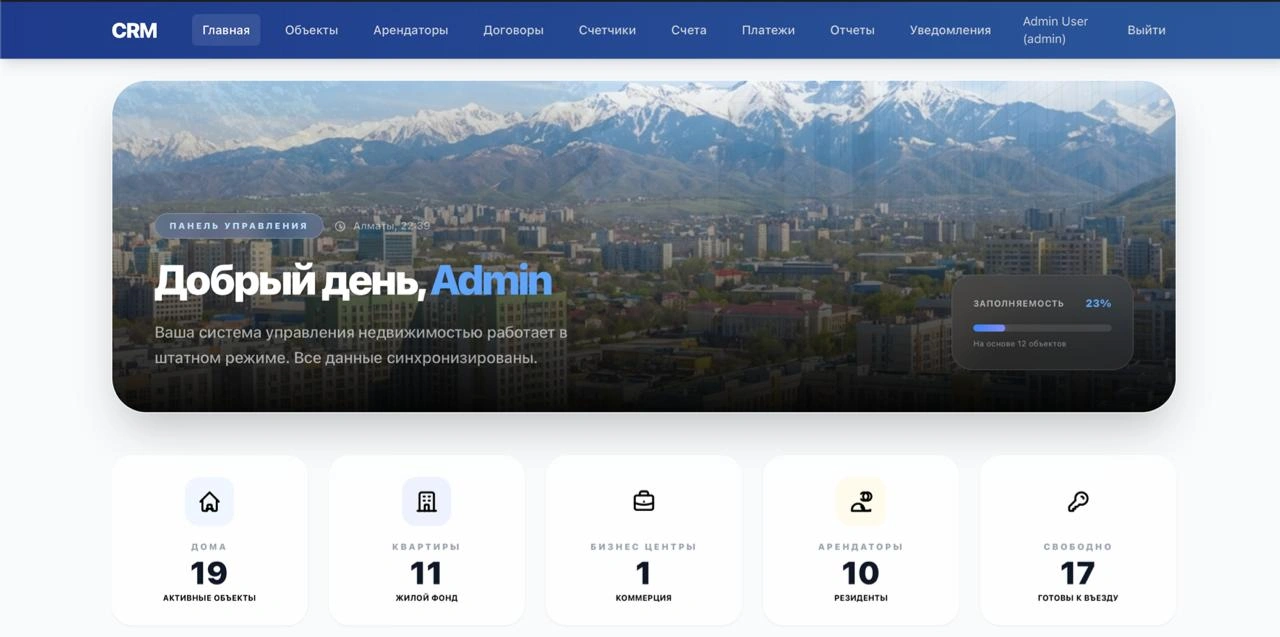
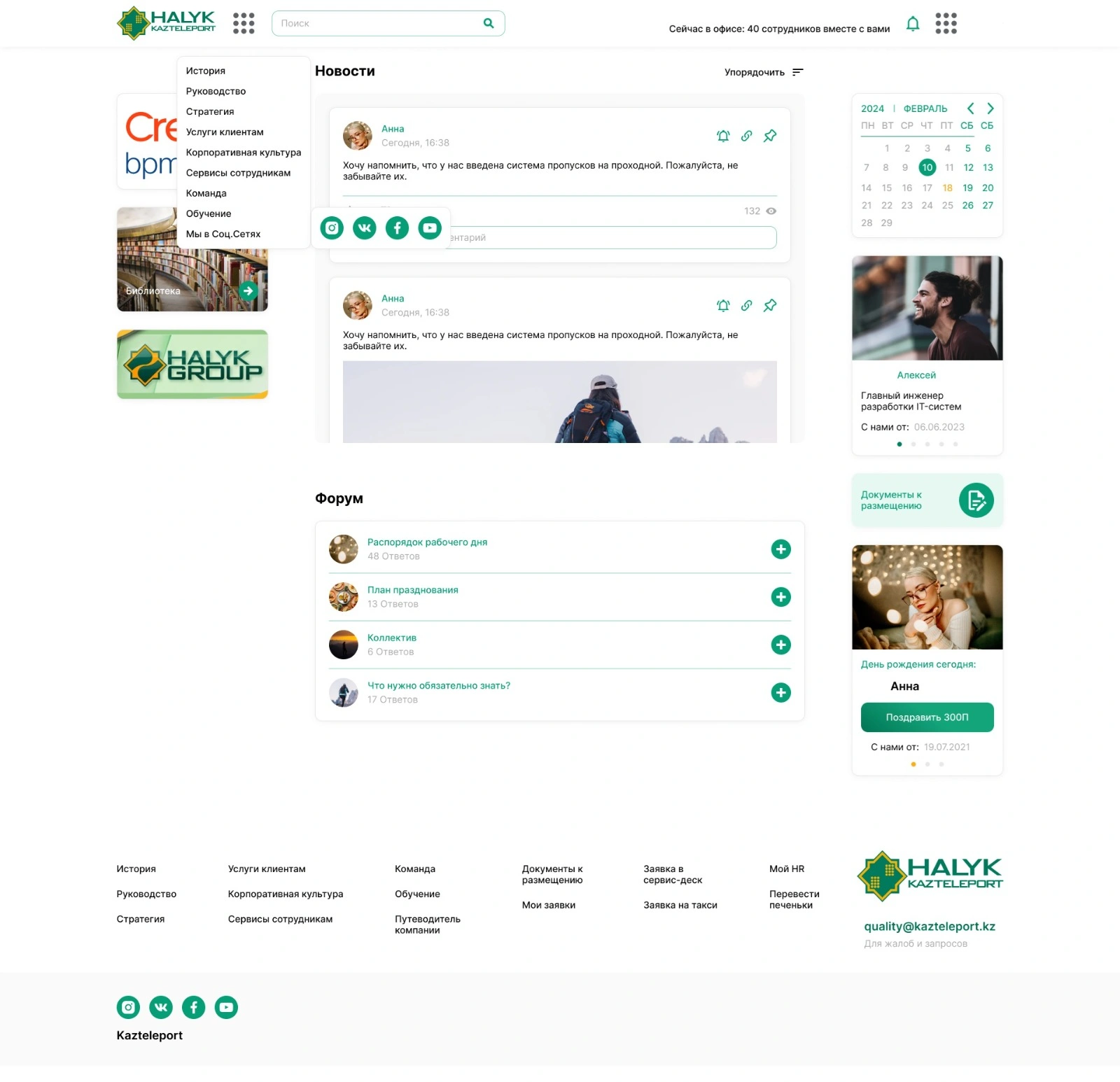
Our projects include a Dealer Management System for the Kia distributor in Kazakhstan, a WMS for KAZMINERALS integrated with Oracle ERP, a CRM for the Ak Zhol Pharm pharmacy chain, a CRM for managing property rentals and an internal corporate portal for Kazteleport JSC.
What we automate
- Sales and customer relations (CRM). A single customer base, a deal pipeline, lead distribution among managers, call and message history, reminders and control of response times.
- Dealer and partner networks (DMS). Lead routing by region and dealer, KPI tracking, reporting for the head office and access rights for each partner.
- Warehouse and logistics (WMS). Multiple warehouses and storage zones, bin locations, receiving, transfers, stock counts, shipping, batches, serial numbers and expiry dates, barcode scanners.
- Purchasing and inventory. Stock by branch, automatic supplier orders based on minimum levels, records of suppliers and contracts.
- Contracts, invoices and payments. Contract deadlines, automatic invoicing, payment and debt tracking, utility charges based on meter readings.
- Internal processes. A corporate portal with tasks between departments, document flow and approvals, a knowledge base, a calendar and employee accounts.
- Customer service. Customer accounts with transaction history, payment schedules, online payments, requests and document signing.
- Training. LMS platforms with courses, tests, assignment review and progress reports.
Signs it is time to automate
- leads get lost and nobody knows who handled them and when;
- stock is reconciled by hand and discrepancies only surface during stock counts;
- management builds reports from several spreadsheets and spends days on it;
- the same data is entered into two or three programs;
- new staff take weeks to find their way around, and customer history leaves together with the manager.
Automation often starts with a single bottleneck — say, website leads get lost between managers or the warehouse is reconciled in Excel — and the system then grows module by module. If warehouse or field staff need a phone instead of a computer, a mobile app can be connected; if you need a platform for external users, that's a portal or marketplace.
Custom CRM or Bitrix24 and amoCRM
Off-the-shelf CRMs — Bitrix24, amoCRM and others — work well for a typical sales team: lead, deal, call, invoice. If your processes fit that pattern, you don't need custom development, and we will tell you so. We also connect ready-made CRMs to websites and online stores.
A custom system pays off when:
- your processes are non-standard — a dealer network, a pharmacy warehouse with batches and expiry dates, rental management, multi-step approvals;
- you have many users, and per-seat subscription fees grow with the company;
- you need deep integration with 1C, ERP, warehouse equipment, telephony and the website rather than syncing through middleware;
- several scattered programs and spreadsheets have to be replaced by one system with shared data;
- the interface must be simple for staff with different levels of experience — storekeepers, couriers, operators.
There is also a middle way: keep an off-the-shelf CRM for sales and move the warehouse, documents or partner work into a custom system connected via API. We work out which route makes more sense during the discovery stage, before development starts. Read more about how CRM differs from ERP and when you need each in our article “CRM and ERP: what's the difference”.
Systems we have built
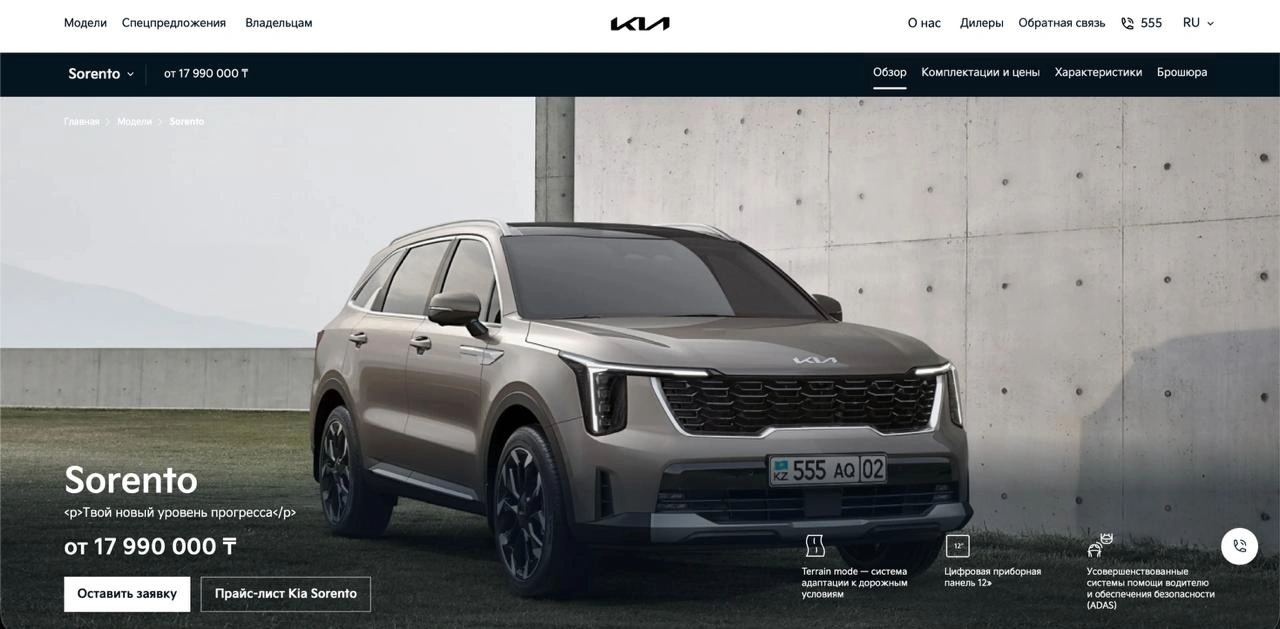
- DMS for the Kia distributor in Kazakhstan. A Dealer Management System built from scratch: automatic lead routing by region and dealer, response time control, a pipeline from first contact to car handover, regional KPIs and dashboards for the head office. Forms on kia.com.kz feed straight into the DMS.
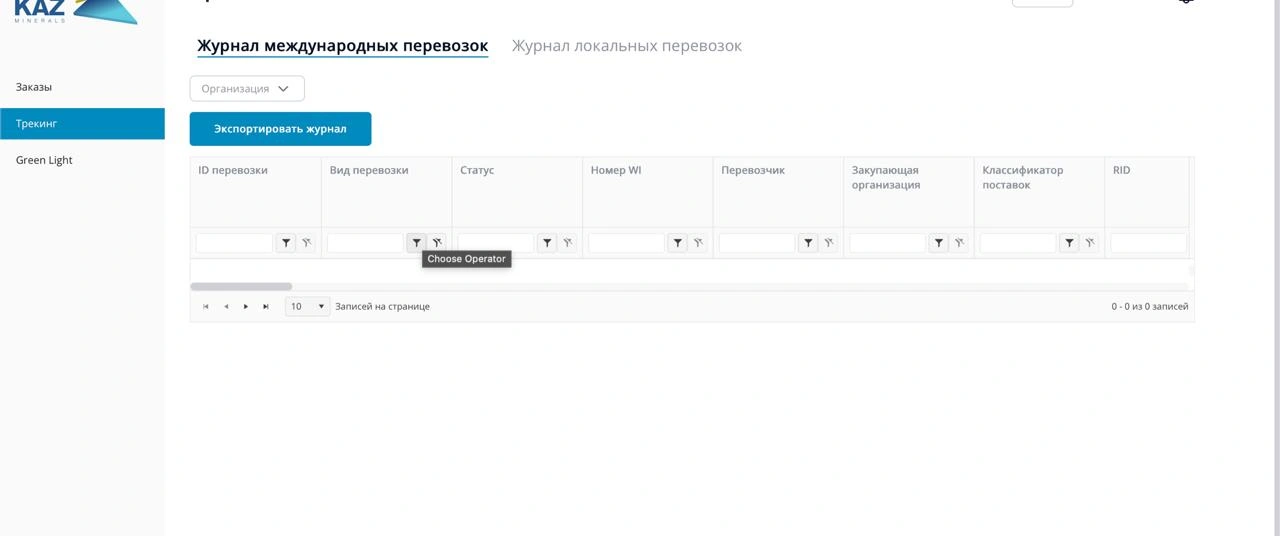
- WMS for KAZMINERALS. A warehouse system built without boxed products: multiple warehouses, bin locations, receiving, shipping and stock counts, real-time work with barcode scanners. Two-way integration with Oracle E-Business Suite keeps items, documents and actual stock movements in sync automatically.
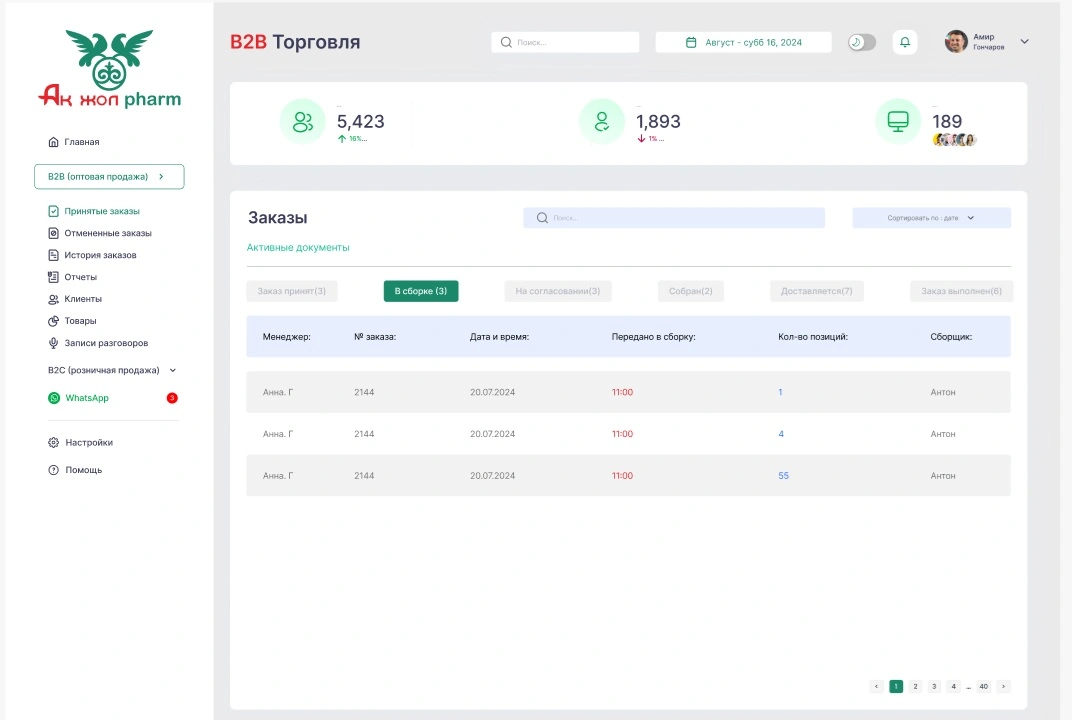
- CRM for the Ak Zhol Pharm pharmacy chain. Stock by pharmacy with batch and expiry tracking, stock counts with data collection terminals, automatic supplier orders, sales and a loyalty programme, B2B orders via the Provizor platform, integration with IP telephony and Wazzup for customer messaging.
- CRM for property rental management. Properties, tenants and contracts with deadline reminders, automatic invoices, payment and debt tracking, meter-based utility charges and a management dashboard.
- Corporate portal for Kazteleport JSC. An intranet with employee accounts, cross-department tasks, document flow, a calendar and a knowledge base, integrated with internal accounting and HR systems.
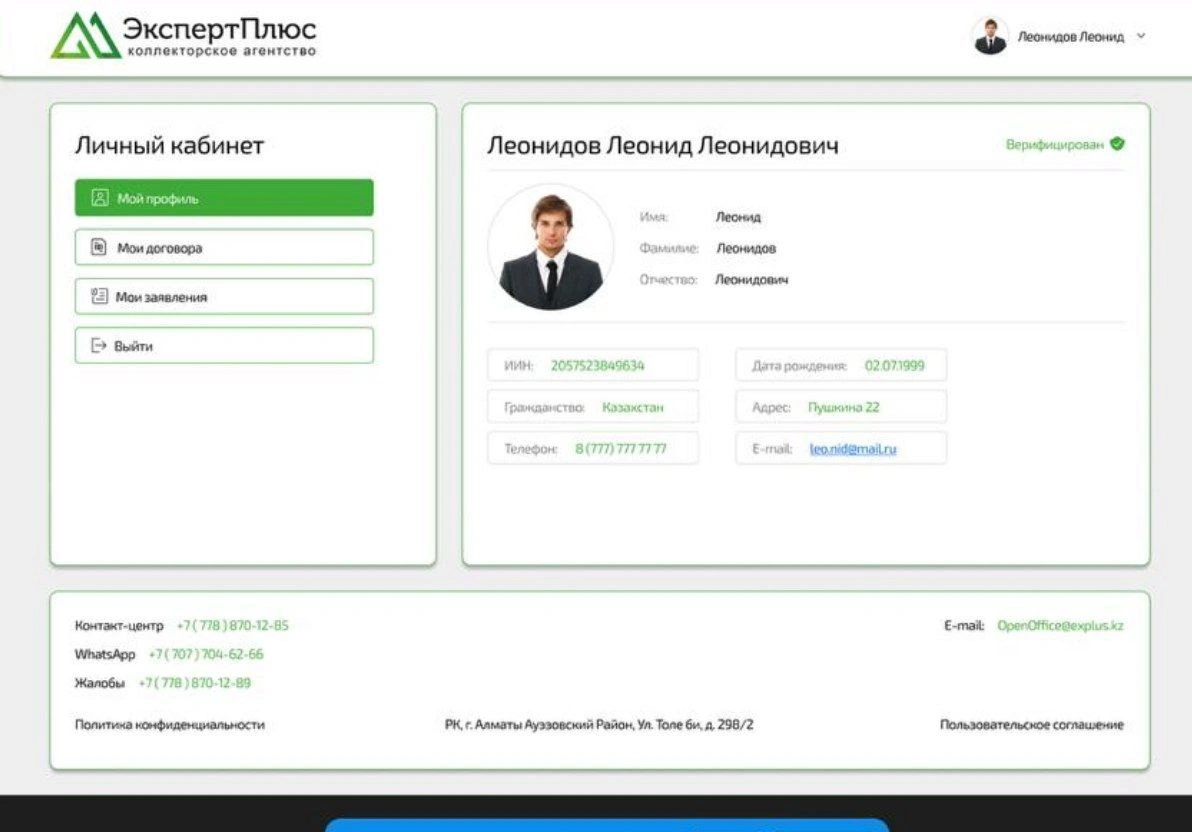
- Customer portal for the Expert Plus collection agency. Login with an IIN and SMS code, debt and payment schedule details, online payments via Kaspi, Halyk and ePay, messaging with an agent and signing agreements.
Detailed descriptions of these projects are in our portfolio.
Integrations with accounting, payments and communications
A CRM that lives apart from your other software soon becomes just another spreadsheet to fill in by hand. That's why we build integrations into the architecture from the start.
- Accounting systems: 1C, Oracle ERP, MoySklad — items, stock, documents, settlements.
- Payments: Kaspi, Halyk, ePay — online payment of invoices and debts with automatic balance updates.
- Customer communications: IP telephony (call history in the customer card), WhatsApp via Wazzup, SMS, email and push notifications.
- Website and ads: leads from the website, landing pages and online store arrive in the system together with their source.
- Hardware: barcode scanners, data collection terminals, mobile apps for staff.
- Off-the-shelf CRMs: data exchange with Bitrix24 and amoCRM if part of the process stays there.
- Documents: generating contracts and invoices, signing via SMS or digital signature.
- External partners: APIs for dealers, suppliers and B2B platforms.
We design the exchange so that a failure in an external system doesn't break your work: every exchange operation is logged and protected from duplication. If you only need to connect a website to Kaspi or 1C without a separate system, see Kaspi, 1C and MoySklad integration.
Development and rollout stages
- Discovery. We meet the management and the staff who will use the system and look at how processes work today: where data is kept, which operations are manual and where time is lost.
- Processes and roles. We define who does what in the system, which statuses requests, documents and goods go through, and which reports management needs.
- Specification and plan. We split the system into modules and set the launch order, starting with the module that pays off fastest. The timeline and cost of each stage are fixed in the contract.
- Interface prototypes. We show the screens before coding and test them with future users, so the system is clear without lengthy training.
- Development and integrations. We build the modules and connect accounting, payments, telephony and hardware.
- Data migration. We load customers, products, contracts and stock from old programs and spreadsheets.
- Pilot. We switch the system on for one department, warehouse or branch, collect feedback and fix pain points.
- Training and full rollout. We train staff, prepare guides and move the whole company onto the system.
- Further development. After launch we add modules and reports as the business grows.
What we need from you: a responsible person who makes decisions on the project, access to future users of the system for interviews, samples of the documents and reports you use today, and access to your accounting systems to set up data exchange.
Timelines depend on the number of modules and integrations, so we give them after discovery. A phased approach lets you start using the system before every feature is ready and spread the budget over time.
How much CRM development costs
Developing a CRM or automation system starts from 1,500,000 ₸. We calculate the exact cost after studying your processes, so the estimate is based on real tasks rather than a generic feature list.
What affects the price:
- the number of modules: sales, warehouse, purchasing, contracts, finance, reports;
- the number of roles and the complexity of access rights — managers, executives, branches, external partners;
- integrations with 1C, ERP, payment systems, telephony and hardware;
- a mobile app or an interface for data collection terminals;
- the volume of data migrated from old systems;
- requirements for load, security and operation logging.
How to reduce the upfront investment: launch one module that solves your most expensive problem first and grow the system as it delivers results. Payment then follows the stages rather than coming as one lump sum.
How to estimate payback. Count how many hours a month staff spend copying and reconciling data by hand, how many leads go unanswered, and what errors in stock and invoices cost you. This is usually enough to see which module to automate first and how quickly it will pay for itself.
Unlike boxed CRMs, a custom system has no per-user subscription fee, so the cost of ownership doesn't rise as your headcount grows. After launch the system is under warranty, with 24 months of free technical support.
Installments. You can pay for development in parts directly to the studio — up to 12 months, with no bank and no markup; the down payment and schedule are agreed individually. Details are on the Installments page.
Why Studio Nomad
- Experience with complex systems. A DMS for a dealer network, a WMS integrated with Oracle ERP, a CRM for a pharmacy chain with data collection terminals — these are not brochure sites but systems that companies rely on every day.
- Built from scratch around your processes. No boxed limitations: the system does what your business needs and grows with it.
- A stack that fits the task. Laravel, Vue and Node.js for most systems, .NET and C# for enterprise solutions where the client's IT landscape requires it.
- Security and control. Role-based access, operation logs, protection against double write-offs and duplicate data.
- In-house team. Interface design and development are handled by the studio's own specialists, without freelancers.
- Contract, staged payments and installments for up to 12 months. Risks are shared: you pay for the result of each stage.
- 24 months of free support after launch.
If you also need a new website that sends leads into the system, see corporate website development or online store development. For a preliminary estimate, describe your task in the form on the Order a website page: which processes you want to automate, how many employees will use the system and which programs it must connect to.
Our work
Frequently Asked Questions
How much does CRM development cost?
What is business automation?
Why choose a custom CRM over Bitrix24 or amoCRM?
Which systems can the CRM be integrated with?
How long does development take?
Can I pay in installments?
What happens after launch?
Related articles
Other services
- Website Development
- Corporate Website
- Online Store
- Landing Page
- Business card website
- Marketplaces and Portals
- Mobile App Development
- SEO Promotion
- SEO Audit
- Website Support
- Website redesign
- Kaspi & 1C integration
- Web Development in Astana
- Car dealer website
- Clinic website
- Education website
- Construction company website
- Financial company website
- Logistics company website