

Marketplace, Portal and Web Service Development
A marketplace, portal or web service is no longer just a website but a platform with several user types, personal accounts, transactions, payments and complex business logic. Studio Nomad provides turnkey marketplace, portal and web service development — from describing the business model and writing the specification to database architecture, design, development, testing and launch.
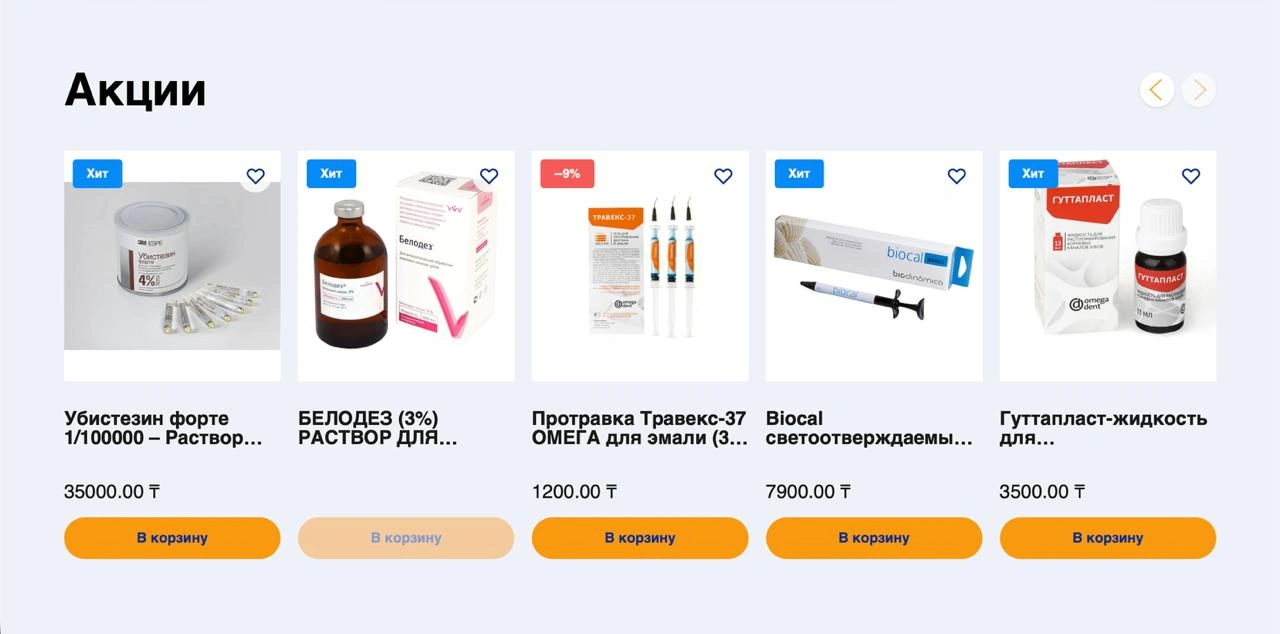
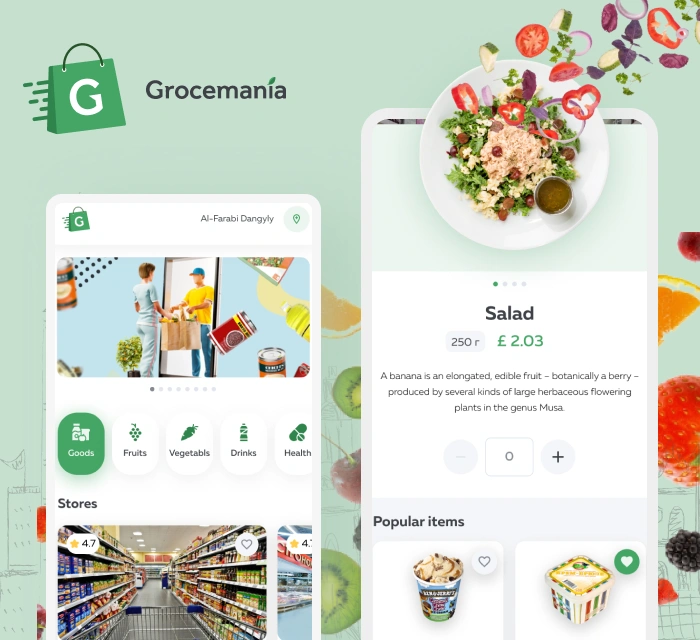
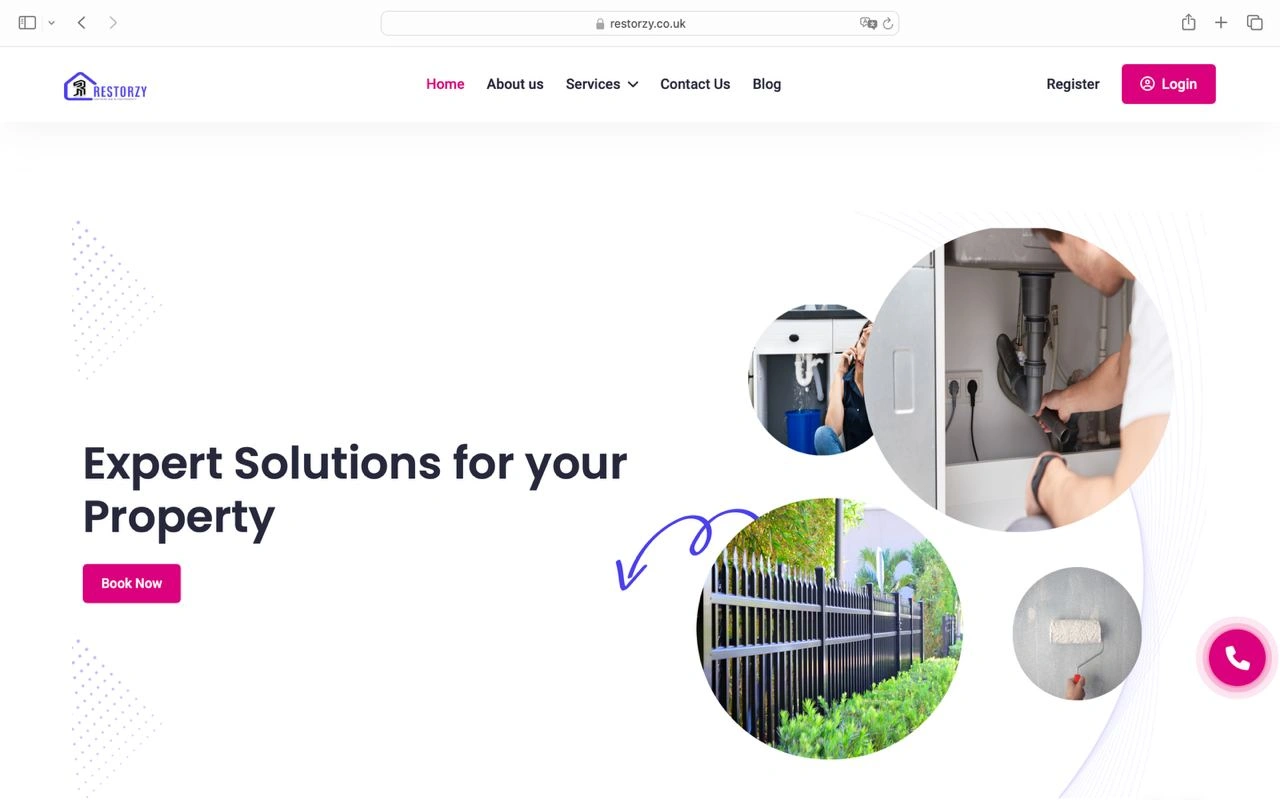
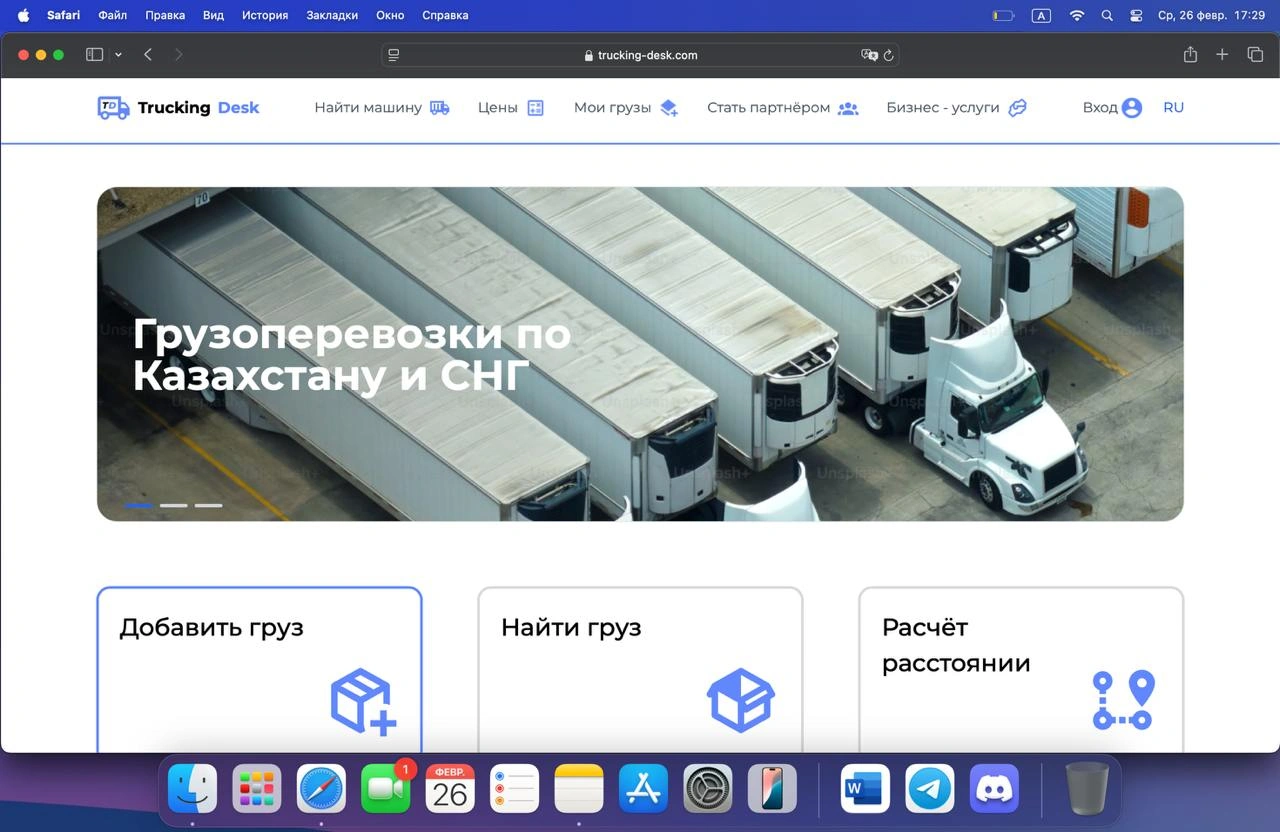
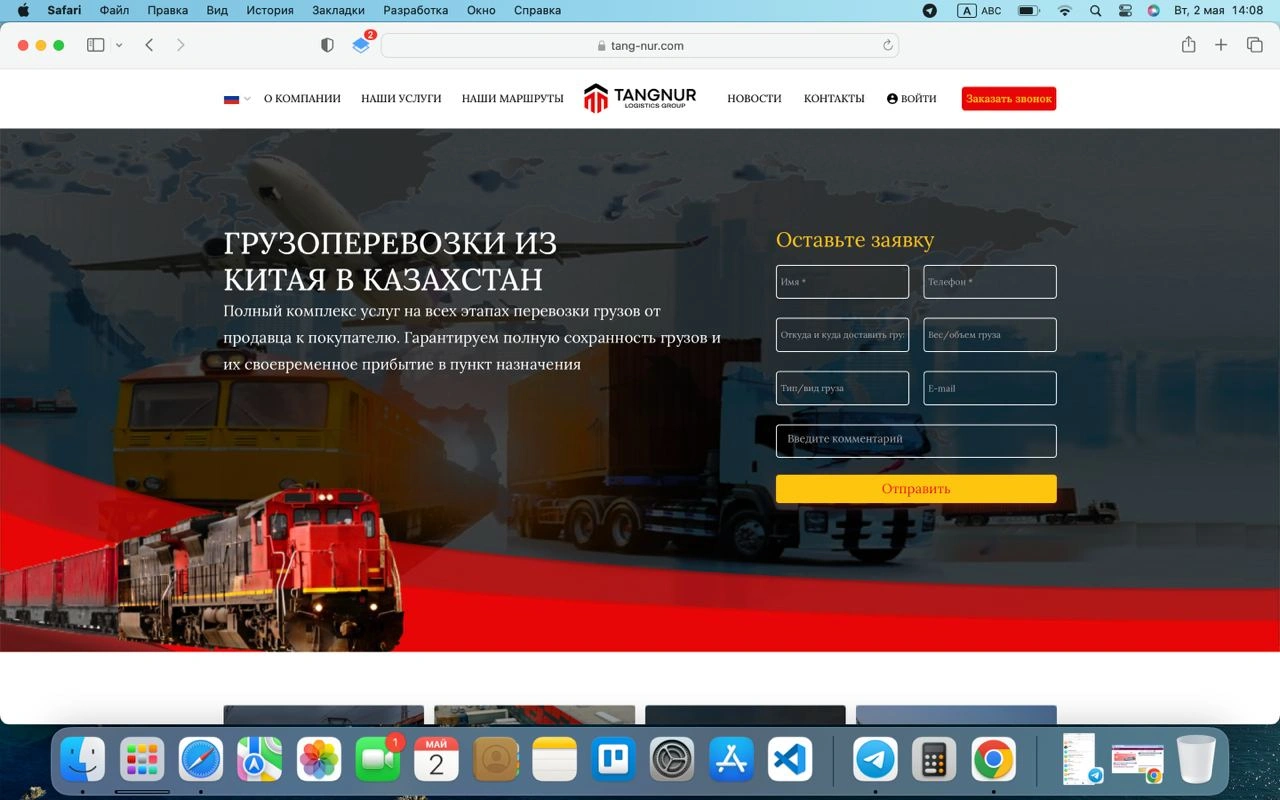
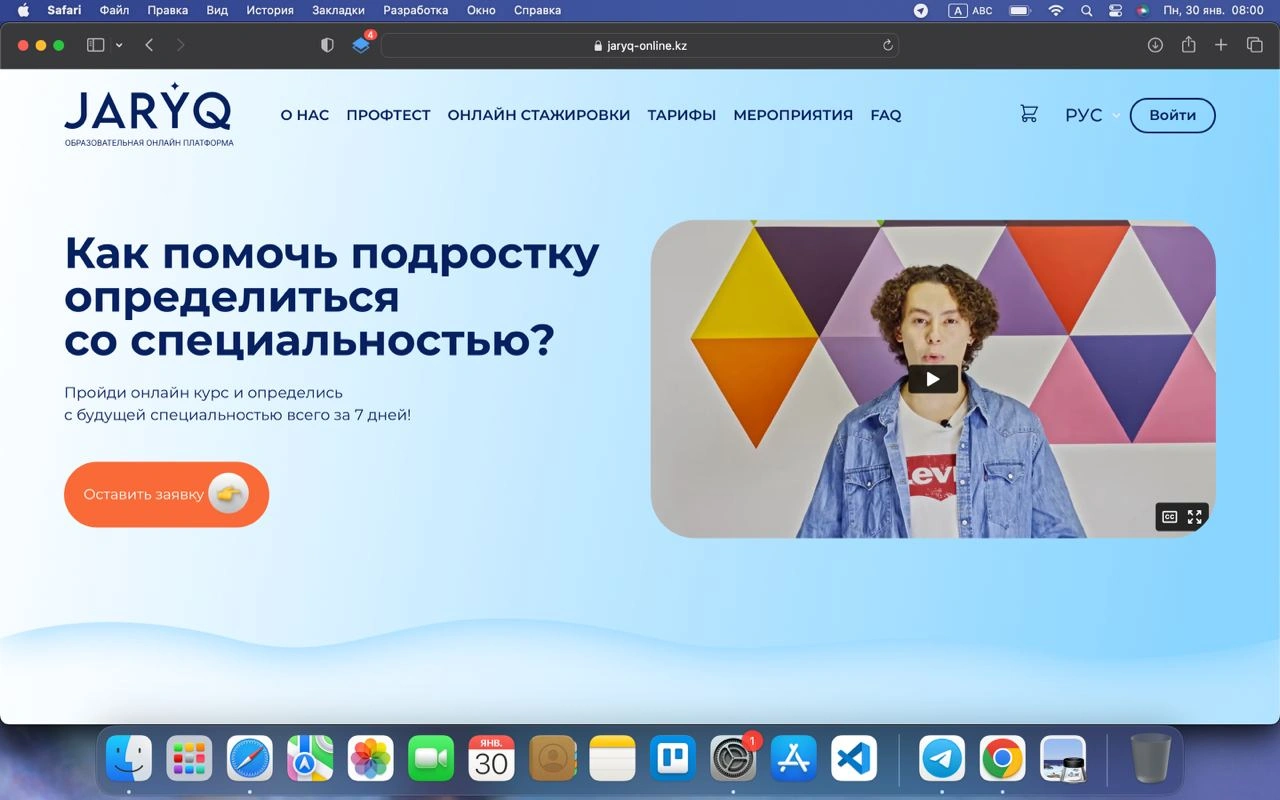
We have built Prodiado, a B2B marketplace for dental supplies; Grocemania, a grocery marketplace for the UK market; Restorzy, a platform for booking home and garden specialists; the Trucking Desk freight portal; a logistics portal with a client account; the Jaryq and Mentor Me education platforms; the iTraveller travel portal; and an online lending service for the microfinance organization CCLOAN. We write every platform from scratch, without boxed solutions, so it grows together with the business.
Development starts from 800,000 ₸, with a typical range of up to 2,500,000 ₸; large platforms are estimated individually. We work under a contract, provide a 24-month warranty, and you can split the payment — installments of up to 12 months with no banks and no overpayment.
What we build
People often mean different things by "portal", "marketplace" and "web service", so we clarify the model at the first meeting. A marketplace connects many sellers or providers with buyers and handles the catalog, transactions and payments. A portal brings together content, services and personal accounts for a specific audience — for example, players in an industry. A web service solves a specific user task online: booking, calculation, application, learning. Often a single project combines all three roles. Here is what we have built:
- B2C and B2B marketplaces. Platforms where many sellers meet buyers: catalog, seller profiles, cart, payments and moderation. Prodiado is a B2B marketplace for dental clinics, laboratories and distributors with a multi-level catalog, a buyer account, order history and a supplier onboarding module. Grocemania in Birmingham lets people order groceries from local shops and supermarkets for courier delivery.
- Service marketplaces and aggregators. A client finds a provider, compares offers and confirms the order. Restorzy connects UK residents with specialists for urgent home and garden jobs: instant responses, personalized recommendations, and a verification and rating system.
- Industry portals. Logistics, construction, travel. The Trucking Desk freight portal brings together carriers, dispatchers and clients; the BuildZone construction portal gathers a database of technical supervision documents, sections for individuals and companies, and job listings; a travel portal connected to tour operator APIs sells flights, tours and hotel rooms.
- Personal accounts and B2B portals. Online services for clients and partners: contracts, orders, statuses, documents and payments. For a logistics company we built a client account that covers everything from signing the contract to monitoring loading with photos and videos; for the debt collection agency Expert Plus, an account with debt details, a repayment schedule and online payment.
- Education platforms and LMS. Courses, tests, certificates, payments and promo codes. The Jaryq portal with payments via Kaspi QR and Halyk, the Mentor Me platform for admission to universities abroad, and the studio's own LMS platform.
- Portals for communities and events. TanuAward is a national award platform that provides information support and engagement with participants and audiences; NAPMK is an industry portal with news and an analytics section on the global oilseed market.
- Fintech and online sales. The CCLOAN online lending service with remote biometrics, Tayyab Auto's halal car financing, ticket sales for the San Remo water park, and tour search and booking on iTraveller.
If you are not sure whether you need a marketplace or an online store is enough, ask a simple question: who sells? If only you sell, it is an online store. If other companies sell on the platform or third-party providers work through it, it is a marketplace, and it needs seller accounts, moderation and partner settlements.
Core marketplace features
The feature set depends on the platform model, but most projects share a common set of modules:
- Roles and personal accounts — buyer, seller or provider, moderator, administrator, each with their own interface and permissions.
- Catalog and search — multi-level categories, attribute filters, search, product and service pages, favorites.
- Seller onboarding — partnership applications, verification, product upload by hand, from Excel or via API, and content moderation.
- Orders and transactions — cart, checkout, statuses, history, and notifications by email and messengers.
- Payments — online payments via Kaspi, Halyk and other services, platform commission calculation and financial reporting.
- Ratings and reviews — reputation for sellers and providers, as in Restorzy and Trucking Desk.
- Integrations — 1C, CRM, warehouse systems, delivery services, maps and partner APIs.
- Admin panel and analytics — management of users, content, orders and payouts, with reports on key metrics.
Moderation and trust
The more sellers you have, the more quality control matters: document checks at registration, moderation of listings before publication, user complaints, blocking of dishonest participants and an audit log of admin actions. Restorzy, for example, has a specialist verification and rating system.
Monetization models
We design the payment logic around your business model: a commission on every transaction, seller subscriptions, paid listings and promotion, ad placements, paid features for users, or a combination of these. The earlier the model is defined, the easier it is to build into the database and financial reporting instead of reworking the platform after launch.
MVP for startups: launch without unnecessary costs
If you are launching a new product, there is no need to build a platform with every feature at once. It makes more sense to start with an MVP — a minimum viable product that tests the main hypothesis: will sellers join the platform, and are buyers ready to pay?
How we help startups:
- we analyze the business model and isolate the features the product cannot work without, moving everything else into the roadmap;
- we design the architecture so the MVP does not need rewriting after the first wins: the database, roles and API are built for growth from the start;
- we create a clickable prototype you can show to investors and early users before development begins;
- we launch the first version, connect analytics and decide together, based on data, what to develop next.
A typical marketplace MVP includes buyer and seller registration, a simple seller account, a catalog with search and basic filters, product or service pages, a cart or request form, online payments, order notifications and an admin panel for moderation. Ratings, advanced filters, loyalty programs, a mobile app and integrations with accounting systems come in later releases, once early users confirm demand.
One startup project in our portfolio is Mentor Me, a platform that digitizes admission to universities abroad: we built it from scratch, with a personal account and a separate education platform. For tips on approaching the first version of a product, read our article "Building an MVP: to be or not to be?".
Stages and timeline
- Analysis and specification. We describe roles, scenarios, business rules, integrations and load requirements, and write a full specification and feature description.
- Prototypes. Interactive prototypes of key screens: catalog, seller account, checkout and admin panel.
- Design. Branded page mockups, responsive versions and a UI kit for future development.
- Architecture and development. We design the database and build the back end, API, CMS and interfaces, showing results on a staging server as each module is ready.
- Testing. Alpha and beta testing, load checks and bug fixing before launch.
- Launch. Deployment to the production server, payment and analytics setup, on-page SEO and training for your team.
- Growth. 24 months of free technical support, with new features delivered under an agreed roadmap and contract.
At the start we need a description of the business model, examples of platforms you see as benchmarks, requirements for roles and payments, and the contact of the person who makes product decisions. If some questions are still open, we will answer them together during the analysis stage.
The timeline depends on the number of roles, modules and integrations. We give it after the specification and fix it in the contract stage by stage, so you know when each module will be ready and can plan your marketing launch.
A platform needs its first sellers and first buyers, so we recommend preparing catalog content, partner agreements and ad campaigns in parallel with development. After launch we can help with SEO promotion of the catalog — from 100,000 ₸ per month.
How much a marketplace or portal costs
Developing a portal, marketplace or web service at Studio Nomad costs from 800,000 ₸; the typical range is 800,000 to 2,500,000 ₸. Large platforms with many roles and integrations are estimated individually. The price depends on:
- the platform model: products or services, B2C or B2B, one seller or many;
- the number of roles and personal accounts;
- payments: online payments, commissions, payouts to sellers;
- integrations with 1C, CRM, warehouse, delivery, maps and external APIs;
- load and security requirements;
- a mobile app in addition to the web version — see mobile app development.
The price includes the specification and feature description, mockups and design, a CMS built from scratch, API integrations, alpha and beta testing, on-page SEO and two years of technical support. Besides development, budget for hosting and servers, payment service fees and marketing: the platform has to attract both sellers and buyers at the same time. Portals and marketplaces qualify for installments of up to 12 months directly with the studio: the down payment and schedule are set individually, with no banks and no overpayment. You can compare with plans for other website types on the order a website page.
Technology and architecture
We build platforms on a stack that scales: Laravel or Node.js (Express) on the back end, Nuxt (Vue) or Next.js (React) for interfaces, and MySQL or PostgreSQL databases. For specific tasks we use other tools: for example, we built the WMS for KAZMINERALS on .NET and C#, and the Grocemania marketplace on Magento 2.
- Architecture built for growth — modules, queues, caching and APIs, so you can add new sellers, a mobile app and external services without rewriting the core.
- Security — access control, encryption of transmitted data, monitoring of suspicious activity and backups.
- SEO for catalogs — human-readable URLs, meta tag templates for thousands of pages, product structured data, a sitemap and fast loading.
- Integrations — Kaspi and Halyk payment services, 1C and MoySklad, CRM and delivery services. Read more on the Kaspi and 1C integration page.
As the number of products and users grows, search, the catalog and background jobs become the bottlenecks. That is why we plan database indexes, catalog page caching, queues for product imports and mailings, and separate storage for files and images in advance. Before launch we run load tests so you know how much headroom the platform has.
We also have experience abroad: Grocemania and Restorzy operate in the UK, so we take into account multiple languages, currencies and user experience expectations. If your business needs an internal management system rather than a public platform, see CRM development and automation; for a store with a single seller, an online store is enough.
Why Studio Nomad
- Real platforms in our portfolio — marketplaces, portals, personal accounts and LMS for Kazakhstan and the UK.
- Full cycle in one studio — analysis, design, development, testing and SEO by our in-house team.
- Our own code, no boxed solutions — the platform is written for your business model and is not limited by off-the-shelf engines.
- Contract and transparent estimate — scope, stages, timeline and price are fixed before work starts.
- 24-month warranty and technical support after launch, followed by ongoing support under a contract.
- Installments of up to 12 months with no banks and no overpayment.
- Office in Almaty, working with companies across Kazakhstan, including Astana.
Tell us about your idea — leave a request on the order development page. We will help you define the MVP and estimate the budget and timeline.
Our work
Frequently Asked Questions
How much does marketplace development cost?
Can we start with an MVP?
Do you use off-the-shelf engines?
Can you set up online payments and a platform commission?
Will there be a mobile app?
Do you offer installments?
Who will support the platform after launch?
Related articles
Other services
- Website Development
- Corporate Website
- Online Store
- Landing Page
- Business card website
- CRM & Automation
- Mobile App Development
- SEO Promotion
- SEO Audit
- Website Support
- Website redesign
- Kaspi & 1C integration
- Web Development in Astana
- Car dealer website
- Clinic website
- Education website
- Construction company website
- Financial company website
- Logistics company website