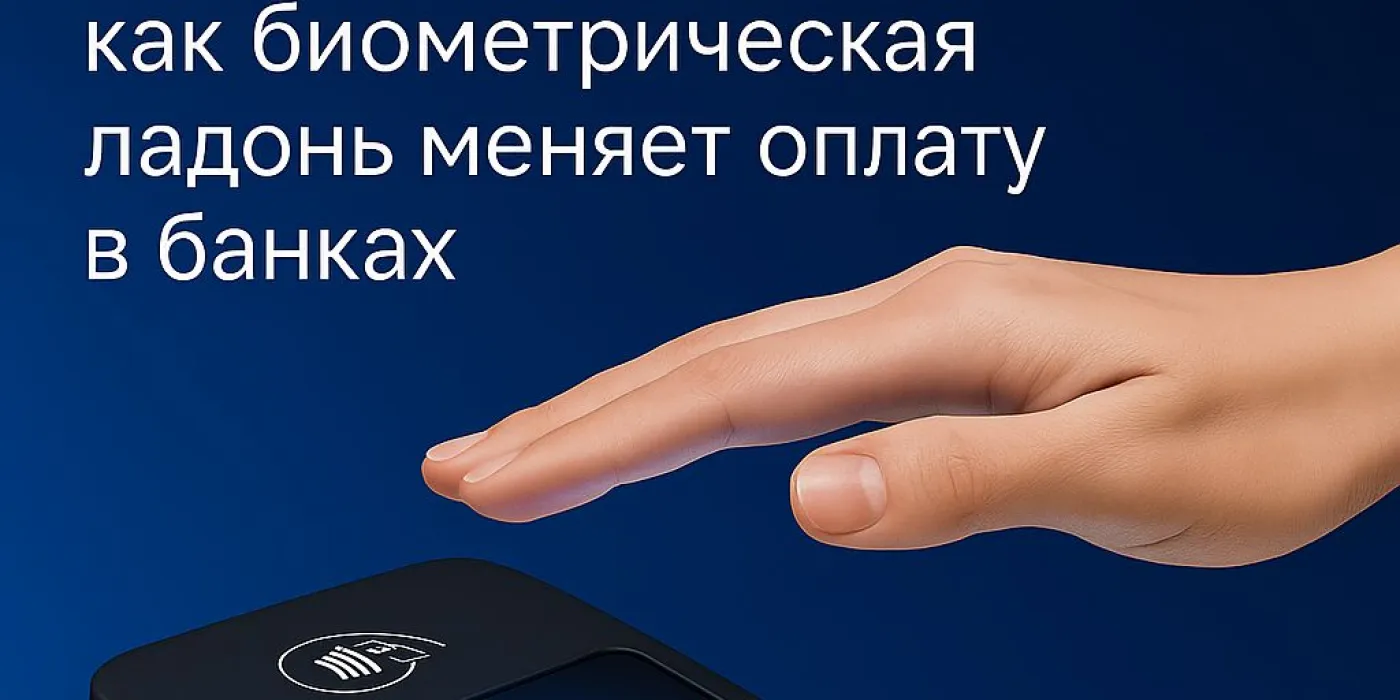

In an era of instant payments and digital financial services, security and convenience come to the forefront. Biometrics is more than just a trend — it is changing the very approach to payments. Alaqan, a solution based on palm scanning, is beginning to be rolled out across Kazakhstan's banking infrastructure, offering users an alternative to cards, cash, and apps.
How the technology works
The Alaqan system reads the unique vein pattern of the palm, which cannot be forged or transferred to another device. To pay, the customer places their hand on a reader terminal, and the transaction goes through in seconds: the user needs no phone, card, or cash.
Scan data is converted into an encrypted digital key and is not stored as images, which raises the level of security and helps meet personal data protection requirements.
Why banks are adopting this payment method
Maximum convenience: users can pay without a card or phone — a palm is all it takes.
Transaction speed: especially important for high-traffic locations such as cafes, supermarkets, and ATM services.
Stronger security: biometric palm identification is far more resistant to fraud than PIN codes and CVV codes.
Less strain on infrastructure: less dependence on cards and mobile devices, and less sensitivity to technical failures.
Implementation examples
In Kazakhstan, the technology has already begun testing in the banking sector: in pilot projects, major financial institutions are connecting to the Alaqan system and equipping points of sale with palm-reading terminals. The rollout is expected to expand to the entire ecosystem of bank payments and POS networks.
What banks need to consider
Data protection: storing and processing biometric data requires strict security protocols.
Infrastructure investment: terminals and integration with ATMs, POS systems, and apps.
Customer communication: it is important to explain to users how the system works, how registration works, and what the benefits are.
Legal compliance: working with biometrics requires compliance with personal data regulations and user consent.
Conclusion
Palm biometrics with the Alaqan system paves the way to a new level of fintech payments: contactless, faster, and more secure. For banks ready to be among the first to adopt the technology, it can become a competitive advantage and attract an audience eager for innovation.
Built into Kazakhstan's financial infrastructure, this technology promises the next step in the evolution of payments — a seamless shift from wearable devices to the most natural identifier of all: your hand.