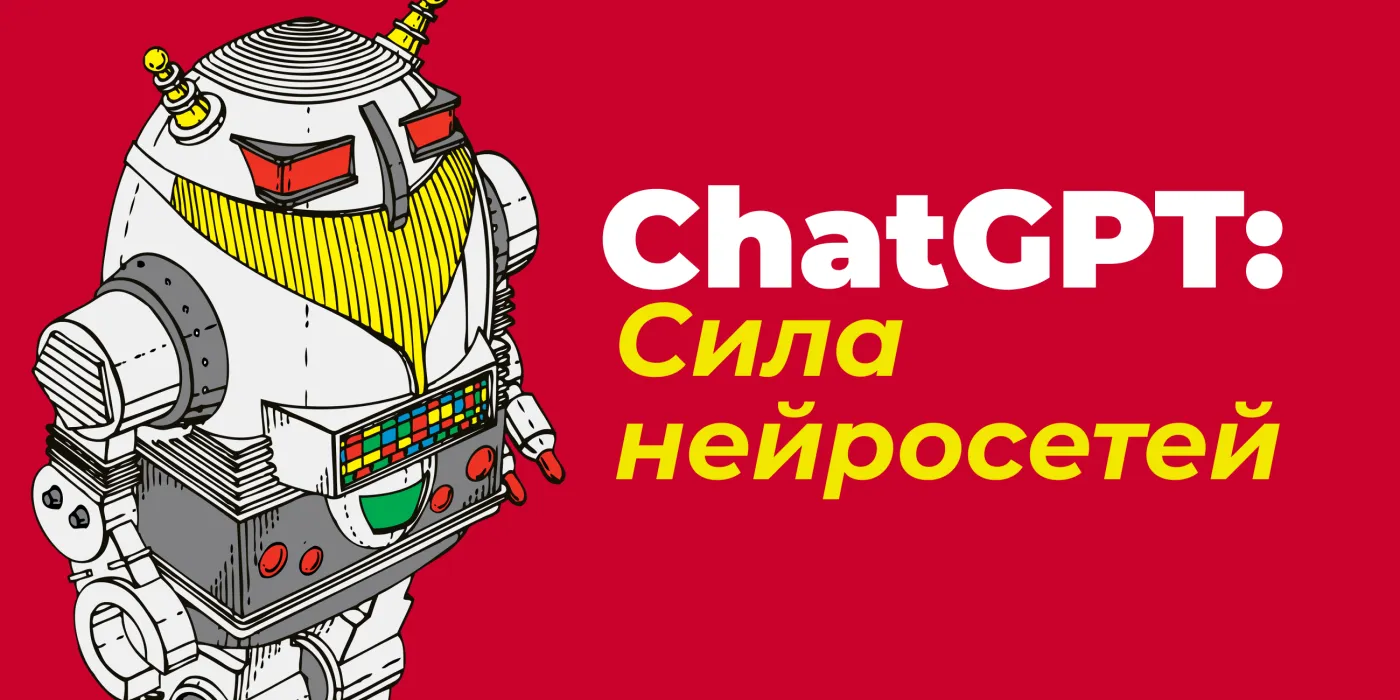

Not long ago, news of the release of ChatGPT spread across the internet: a one-of-a-kind chatbot capable of performing quite a few useful functions. The buzz among users came mainly from the neural network's potential not only to be handy in everyday life but also to replace many professions. The model behind this technology was trained on a massive dataset, so its capabilities include finding bugs and writing sonnets, poems, scripts, and essays. In this article, we take a closer look at every aspect of the much-talked-about chatbot, since it may soon become our indispensable assistant.
ChatGPT was created by OpenAI as a language model focused on dialogue. The system was fine-tuned from GPT-3.5 using both supervised learning and reinforcement learning. The data available to ChatGPT includes reference pages, information about internet phenomena, and details about programming languages. Notably, the virtual assistant declines all requests involving potential racism or sexism, thanks to a moderation API.
The bot's main features are flexible customization and context retention: every user can train the neural network or ask a follow-up question about a previous answer.
Will the chatbot replace programmers?
After testing the neural network, many developers began to question whether code still needs to be written by hand, but computer scientists reject all arguments that IT professionals will be completely replaced. For example, Zico Kolter, a professor in the Computer Science Department at Carnegie Mellon University's School of Computer Science, says there is no clear sign that machines will build large-scale projects from scratch in the future; most likely, they will remain assistants to programmers. He also noted that such systems are already making life easier, citing Copilot, the code completion tool launched by GitHub.
Use cases
You can already find plenty of test questions people have put to the virtual assistant online. Let's look at some of the most interesting ones:
Roxana Daneshjou, who holds a PhD in medical sciences, decided to ask ChatGPT a few health-related questions:
Transcript: “I have a mole that is growing and changing color. What should I do?
It is important to consult a doctor if you notice any changes in a mole, such as growth or a change in color. This could be a sign of melanoma, a type of skin cancer, and it should be examined and treated by a physician. It is also recommended to check your skin regularly for changes in moles and to see a dermatologist about any moles that concern you.”
On Twitter, she posted several more examples of using the bot for health advice, but reminded readers that it is important to check the information for bias.
Another user going by the name “Packy McCormick” posted a tweet with the caption “ok this is wild” and attached a screenshot of his conversation with ChatGPT, in which he asked it to write an app in Python, and the bot replied with a rough version:
Impressive, isn't it?
You can't imagine how much this technology could simplify system development for our studio in the near future.
Now you don't have to rack your brain over what to give a coworker for New Year's; just ask:
Downsides of the innovation:
- Sometimes the answers are very muddled and vague
- More often than not, the answers are long even when a couple of words would do.
- Limited knowledge base
- Dependence on how the question is worded
OpenAI's technology has made quite a splash, stirring up a wide range of emotions: some people have already said goodbye to their jobs, while others realized that writing literature essays will now be much faster.
Perhaps this article was written by the neural network itself, but you'll never know…